Bootcamp is changing!!
From the 1st March 2011 Bootcamp as we know it is changing. I have decided to bring it in line with other aspects of my business to promote it as more of a consistent result-proving format. The good news for you guys is that it will be the same brilliant fun as it always has been (in fact it will be even more fun!!) with even more benefits i.e. nutrition plans, do-at-home exercise plans, etc.
The major change involves the taking and receiving of money. I want my Bootcampers to enjoy the same consistency and support as my Personal Training clients and to run it on the same ad hoc system that I use at the moment just will not work. Therefore I have decided to move it to a monthly payment system. The deal I’m proposing I believe to be fair and if you compare it to other Bootcamps/classes in the area is extremely good value.
What’s it gonna cost you then??
· 1 session a week - £32 per month
o Based on 4 sessions per month = £8 per session
· Up to 3 sessions a week - £60 per month
o Based on 12 sessions per month = Less than £5 per session
With this format you will develop more consistency with your exercise, see better results, the group will be more cohesive as we will know who is coming and who is not and I will be able to tailor sessions better for the group.
In fact it works out much better value for you!! I have based this on a there being four-weeks in every month and just looking at the upcoming months I will be out of pocket. Whilst February I will only be able to deliver 12 Bootcamp sessions every other month of the year there are either 13 or 14. That means if you commit to coming to three sessions per week in December each class will only cost you £4.70!!
With the added bonus of my nutrition plan, optional homework assignments (exercise plans!) and your own private members forum (not Facebook to follow) where I will answer discussions about anything and everything health and fitness related you are getting a pretty awesome deal.
So starting from March 1st it will be all systems go!!!
I am going to step it up to 3x per week by adding a Monday class at 9.15am and I will be looking to add an evening class to this in the near future.
The NEW Bootcamp Format
It will run on a Monday, Wednesday and Friday at 9.15am.
It will cost you…
One Session Per Week = £32 per month
Up to Three sessions p/w = £60 p/m
This MUST be paid before the start of the month by standing order (details upon request), cheque or cash. To guarantee the quality of the class places will be limited and will be on a first come first served basis so to confirm your place book and pay early.
Enrolment for the next month will start a fortnight before.
For those that come once a week I’m asking you to confirm the day that you will be attending. Your sessions will run on a week-to-week basis so if you miss one if you have told me more than 24hrs in advance and I have the space on a later session you can come later in the week but you cannot transfer to the next week. This means that if you have one session p/w and you cannot make one and you contact me with 24hrs notice and say Steve I have to work, if the space is available I will happily carry it over. However, if it gets to Friday and you can’t make it and you don’t show your session will be lost. This I feel is fair as I want you to get the benefits of regular consistent training but I recognise at the same time with work schedules and childcare this is not easy to do.
If you want to come to a one-off session or if you want to squeeze an extra session into your week it will cost you £10 per class. These both have to be confirmed in advance.
If you have a friend who would like to come to Bootcamp they will be entitled to a week free (they MUST register on my website). From here they can join at a proportional rate that will be pro rata down so they can get started straight away. This can work in your favour too. If you refer a friend, when they commit to there first full month of Bootcamp your next months Bootcamp will be half-price. If you refer two friends in one month the next month will be FREE!
There will be no refunds for prepaid sessions – I feel this is exceptional value. And combined with the same Inch Loss guarantee that goes with my PT this I feel is outstanding. If you were to train with me one-to-one 3x per week as people do it would cost you more than £500 per month.
This system will be different to a gym in that you will not be sharing your facility with some sweaty meat head (aside from me!) or posers on there mobile phone. You will enjoy the support and interaction of the fun and friendly group both during and after the sessions. You will get fantastic variety in your training and personal trainer quality instruction. The major change is I want you to plan ahead!!
If you have any further questions please first check out the website www.thefitgreen.com or feel free to contact me on 07786 513388.
Spaces will be limited. This will be on a fist come first served basis. Enrolment for March is now open! To secure your place for March you can pay by a cheque or cash or make a transfer to my account. This MUST be done before the start of the month to secure your place.
Again any questions please don’t hesitate to ask.
Monday, 21 February 2011


Thursday, 27 January 2011
3 Simple Ways to Boost YOUR Metabolism

One of the biggest challenges to any fat loss or weight loss program is to BOOST a sluggish metabolism.
It can be incredibly frustrating when you are trying everything and the number on the scales doesn’t seem to shift.
Boosting your metabolism can have a HUGE effect on the speed and sustainability of your results. So here are my top 3 tips to stoking your fat-burning furnace (your metabolism!?)…
1. Move Your Body!
When deciding to lose fat most people embark on ‘fat burning exercise.’ By this I mean they sit on a stationary bike, get on the treadmill or even pound the pavements.
Whilst this is better than nothing there is only so much you can do with these sorts of exercise. Most people believe slow and steady is the way to go but in reality this is inefficient and boring.
By applying ‘The 600 Rule’ in which you try and target 600 muscles per workout you will experience a gigantic shift in the way your body burns fat.
By using compound movements such as press ups, squats, burpees, lunges and walk outs you will use a variety of different muscles and kick start your fat burning quickly.
2. Build Muscle!
Overlook this at your peril!!!
Most of the girls that I train are terrified of strength training because they don’t want to become ‘bulky.’ Let me reassure you it will not happen! It can take lots of time and effort to build muscle even if you have the right hormones (i.e. a guy!) it is even more difficult for girls.
You have to understand that 1lb of muscle burns 50calories a day at rest. What does this mean? If we can build 5lbs of muscle you will burn 250calories per day without lifting a finger!!!
Ignore the scales for just one second and think logically. Building muscle will not make you appear bulky (take a look at Gwen Steffani, Cameron Diaz or Jennifer Anniston if you don’t believe me – all of whom lift weights regularly) BUT will make your body more efficient.
If you do this right and follow a good programme the afterburn effect will have you burning calories a higher rate of fat all day.
3. Try Multi-Workouts!
Something I have using with my clients to great effect more recently is multi-workouts.
It’s difficult to find 45mins-1hr during a busy day for a workout so why not break them down train more intensely and do one in the morning and one in the evening.
By waking up 10 minute earlier and doing a hard 10-15min workout and doing the same in the evening once you have put the kids to bed, it is easier to fit in.
Plus just as your metabolism starts to slow down you give it another little kickstart and so the cycle of fat burning continues at a good rate. Makes perfect sense, right?
So there you have it. 3 SIMPLE ways of speeding up a sluggish metabolism. Let me know what you think by leaving a comment on my Facebook page.
Saturday, 8 January 2011
Why fat doesn’t make you fat…

If I had a pound for every time I said it – fat doesn’t make you fat!!!
Due to its unfortunate name and the negative association with spongy looking stuff around your middle, fats have been somewhat bastardised in the last few decades. However, the issue is not so clear-cut (as with all this stuff!!) and there are some distinct differences between good fats and bad fats…
For good reason, unsaturated fats have been held up as the saviour of all things worthwhile. Found in nuts, seeds, oils, meat, fish and avocados, unsaturated fat are shown in those that consume them to make them slimmer. Fat slow down the rate at which sugar hits the blood stream and can lead to greater feeling of satiety from your food, hence the reason that low-fat diets can feel soul-destroying. Fat makes you feel fuller for longer.
Consuming the above foods – or consuming the essential fatty acids they contain - can also stimulate fat loss hormones and help you absorb vitamins and minerals more efficiently. That is why it is such a good reason to add a splash of extra virgin olive oil to a salad and why supplementing with fish oils (or an omega 3 supplement) can be such a good idea.
Nevertheless not all fats are created equal. Trans-fats, a nasty reheated oil, come with numerous health risks. Added to processed food to prolong shelf life, trans fatty acids take various guises such as hydrogenated oil, hydrogenated vegetable fat and partially hydrogenated vegetable oil, amongst other names, and due to there altered chemical structure are implicated strongly in coronary heart disease, obesity and a few cancers. These most definitely should be avoided!
And finally onto poor old saturated fat… These are nothing like trans-fats, and I don’t think saturated fat is anywhere near as bad as people make out. I don’t think you should eat too much, but it has kinda got a bad reputation unfairly. The issue with saturated fat is mostly to do with quality. Like humans’ animals store toxins in adipose tissue (body fat) therefore if you eat good quality, clean, organic fatty meats consuming saturated fats are not a problem. However, if you consume cheap, grain-fed meat that’s pumped with antibiotics and god knows what else you need to be careful.
My advice is to choose the full-fat option when visiting the supermarket if you are buying pre-packaged food, buy the best quality you can afford when it comes to meat, indulge in nuts, seeds, oils, meat, fish and avocados and supplement with a really good quality fish oil.
Thursday, 6 January 2011
The Calorie Myth Exposed

Back in the 1800’s when Wilbur Atwater ‘discovered’ the calorie I wonder if he knew what a stink he would cause in years to come.
By using a bomb calorimeter to measure the energy value of food, scientists now had a way of quantifying food in terms of energy density and thus could calculate what was consumed at mealtime.
Years later by simply equating energy consumption during activity or output, the scientists would have a neat little theory called ‘the energy balance theory’ and the oppression of the calorie was born.
The prevailing nutritional wisdom dictates that if you eat less and move more you will be slim and beautiful. Conversely if you move less and eat more you become a fat pig.
Far be it from me to question something that has existed for years with such success (note my sarcasm), after all our population has been getting fatter in spite of the energy balance theory, however this very simple theory (and it is a theory) has some shortfalls.
Perhaps it’s to do with people’s infatuation with measurement. People do tend to believe what they can measure and it does give them some satisfaction to see quantifiable changes. We see this in every aspect of life from education and our dependence on exams to finance and the economy.
However, when it comes to health this highlights the shortfalls in ‘science’ and modern living. With weight-loss being on such high agenda for many, food manufacturers, the media and the government have taken what was once a theory as an absolute truth, and with it has spawned an entire cottage industry with the calorie at the helm.
Now I realise I’m putting my neck out here and by many will be criticised for being ‘anti-scientific’ but I beg you to question do calories actually measure what they are supposed to? And is there really anything of use and enlightening about knowing the energy value of food?
The medical profession will tell you ‘a calorie is a calorie is calorie’ and ‘the only way to lose weight is to eat less and exercise more’ and that ‘a diet that doesn’t count calories is a ‘fad.’ But dare I say it, and they know this more than me, the human body is complicated.
At any one time all manner of chemical reactions are occurring within the human body. With regard to weight loss some of them are positive and some are negative. As you read this you will have a variety of enzymes, hormones, neurotransmitters and other compounds creating what is commonly known as your metabolism.
The assumption that everyone has the same metabolic reaction to a given food from entry to exit is perhaps the calories first shortfall. This theory doesn’t take into account individualistic nature of the human being. Just as we look different, we function differently too. Some of us can eat spicy food - some of us cant. Some of us can eat bread – some of us cant. The unique nature of the human biochemistry is very much that – unique.
I’m not saying that calories have nothing useful to tell us – I just don’t think they are telling the whole storey. For the most part people are quite greedy and could stand to eat a little bit less. Calories provide an insight, but the energy balance theory has its shortfalls.
Perhaps another reason to question the calorie is very nature in which a calorie is calculated. The bomb calorimeter equates a calorie by burning a food and measuring the ash. To determine how much energy was released and how much energy was contained in the molecular bonds was dependant on how much heat was omitted. In essence the calorie is a measure of heat – one calorie is the measure it takes to raise the temperature of one litre of water. Scientists measure the amount of calories in food by burning it.
Aside from the obvious criticism – we don’t burn our food to create energy, the temperature of which one litre of water will increase is also dependant on several factors - most notably elevation. You can boil one litre of water at 100c at sea level, 96 degrees at 6000ft and 72 degrees on the top of Mount Everest. So if the degree at which water changes temperature varies what use is the equation anyway.
If you think my point of view is restricted to input – I believe the same for output. If you believe the fancy bit of equipment at your gym that tells you the total amount of calories expended as you get off of it is accurate you should think again. How can it accurately estimate calorie expenditure from your age and weight – it can’t. The truth is it’s just a great way of selling treadmills.
Like I have said we are metabolically unique. To assume we metabolise calories in the same way is foolish. I don’t think the energy balance theory is completely wrong – most people do need to move more and eat less. I just think our infatuation with it needs to stop. We are biochemically and physiologically different – just as we look different we function differently.
Counting calories accurately is difficult and time consuming. It also leads to obsessive behaviours. Go to any diet club up and down the country and you will find a group of people who can rattle off the calorie value of any food in the supermarket. These people are none the wiser for it.
My advice to you is that calories DO count, just don’t count calories.
Wednesday, 5 January 2011
Processed Food: Are Foods with Health Claims Really Healthy?

Eating has got complicated! For the fat loss and fitness enthusiast who is listening to the so-called expert even a trip to the supermarket can cause a headache. Antioxidants, omega 3 fatty acids, polyphenols, folic acid, probiotics. It has got to the point where many people don’t see food anymore, just calories.
Inspired by Michael Pollan, whose dictum ‘eat food’ is, amongst other things, a two-word prescription to avoid processed food, I believe there is no need to make this any complicated than it actually is.
You don’t need to know what a protein, carbohydrate, or dare I say it even a fat is, if the food you choose arrives in its natural, nourishing, unprocessed state you have (for the most part) nothing to worry about.
A processed food is one that has been altered from its natural state, to make it cheaper, more convenient, more attractive or to extend its shelf life. More often than not it’s all of the above.
Humans have been processing their food for thousands of years. Freezing, drying, preserving, however in more recent years with the progress in food manufacturing a worrying amount of processing takes place.
In every aspect processed food is both a food manufacturers and retailers dream. With the ability to mass-produce a product and extend its shelf life enables both producers and retailers to make huge profits. By taking a poor quality product, processing it at high temperatures (killing any natural goodness) and adding a variety of sugar and sweeteners they can create something that, rather than like fresh food, will go off in days, will sit on a shelf in a shop or in a warehouse for years before being consumed.
Whilst the Food Standards Agency will claim that the chemicals used in food processing are safe, I think there is an element of putting their head in the sand when it comes to challenging food manufacturers. I believe, and I might be wrong, that it is for the FSA to prove that a food is unsafe rather than the food manufacturers to prove it is safe (If you don’t believe me read the research on MSG and Aspartame). Needless to say two things are for sure, firstly the western diet comprising of lots of processed food, sugar and salt is giving rise to many western diseases such as obesity, type 2 diabetes and heart disease. And primitive cultures that ate no chemically processed foods did not. Therefore it is my recommendation to eat food that resembles its natural state.
What do I mean by this? An apple in a bowl still resembles and apple on a tree, whereas a crisp (having been heavily processed) looks nothing like a potato.
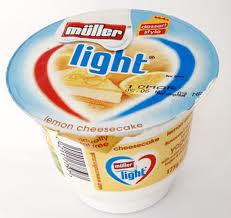
Some of the foods that are processed include the packet of ham, bread (both white and wholemeal), pasta, tins of beans, and yoghurts.
The fact remains eating too much processed food will make you both fat and malnourished. To avoid it follow these couple of simple tips…
1. Don’t eat anything your great-grandmother wouldn’t recognise as food.
2. Avoid foods with ingredients with ingredients you wouldn’t have in your cupboards.
3. Avoid foods that have a sugar or sweetener in the top three ingredients on the label.
4. Don’t eat anything with more than five ingredients on the label.
5. Avoid foods with a health claim on the label.
You can more often than not do this by shopping around the outside of the supermarket.
Saturday, 1 January 2011
Why Toxic Food Makes You Fat
Lets be clear from the start – your body wants to be lean!
It’s a myth that your body clings to fat. It’s not the way evolution designed it to be.
Your body’s natural state is lean and healthy.
Fundamentally, your weight and health are not separate issues. Being overweight is a symptom of being unhealthy. If you focus on health, weight-loss (or more specifically fat loss) will happen as a consequence.
To become really healthy involves a multi-faceted approach including exercise and a healthy lifestyle but it is clear that there is no greater influence on a person’s health than the foods they eat day-to-day.
If the foods you choose to eat a wholesome and nourishing you’ll have a lean and toned physique. However, if the foods you choose to eat are processed, sugary and lets be frank toxic, then your body will store fat.
I have spent years studying nutrition – and observing my clients – and you can absolutely lose weight eating low fat so-called health food and diet coke. But, you will struggle to maintain it due to the toxic nature of the foods you have consumed.
You need to understand that animals store toxins in adipose tissue (in layman terms body fat). If your body is clinging onto fat chances are you are eating toxic food. Therefore if you eat toxic food you will find it hard to lose weight and keep it off.
If you are consuming toxins your body will store more water in an attempt to dilute the toxic foods you are consuming. Hence the reason in the first week of a diet you could drop seven or eight pounds of water.
So what constitutes a toxic food and what constitutes a clean food? Toxins can be commonly found in sugar, alcohol and processed foods, but due to the delicate nature of human biochemistry you can often find a person has sensitivity to caffeine, dairy and wheat too. Hence the reason when starting a diet plan I encourage my clients to eliminate all of the above.
Furthermore, I persuade them to tread cautiously with saturated fats, as like humans, livestock will store toxins in fat, and so if you are indulging in a juicy steak you could inadvertently be taking a bite out of something less than cool. Hence the reason if you are going to cough up your hard earned cash on organic foods it can be a good idea to start by buying organic meat as it’s typically better reared.
Now, my approach to personal training involve working with principles not methods so rather than stipulate high carb, low carb, low fat or high fat I choose to give people more freedom about what to eat based on the above parameters.
This might seem a little dramatic to some but do you really think that it is so bad to encourage people to eat natural nourishing healthy food? I think not. I’m sure most people recognise that foods that last for months and months on a supermarket shelf can’t be good for them. I’m also sure that most people realise that consuming foods that have an unpronounceable or unrecognisable name are not right for them even if it is spuriously labelled as a health food.
Cut out the toxins in your diet COMPLETELY and see what happens.
Why Sugar Isn't So Sweet..

It’s no surprise we love sugar. The instant pleasure, calm and satisfaction it provides can be difficult to top. However, sugar is most definitely NOT so sweet. Sugar comes in various forms such as the most obvious white refined, biscuits, cakes and chocolate to the more difficult to spot such as alcohol, so-called low fat foods and even honey and fruit. I implore you to look past the pretty pink icing and recognise sugar for what it actually is a toxic, energy-dense, nutrient-poor addiction that makes you fat and miserable.
A major part of our issue with sugar is our bodies’ inability to process too much of it. Sugar will give you an instant high because it is absorbed very quickly into the bloodstream, once in the bloodstream, because of the stress that sugar puts on our body, the body will try to self regulate to maintain homeostasis and release the pancreatic hormone insulin. Insulin will diminish the effects of sugar and some, leaving your previously spiked blood sugar to plummeting low. In this low you will feel hungry and exhausted to such an extent that you will need another delicious, satisfying sugary treat to recover.
It is this rollacoaster that causes us so many problems. Once you get on it, it becomes very difficult to get off. The peaks and troughs lead to mindless eating and the consumption of unnecessary calories, that had you not had the sugary snack in the first place, you would not of needed. However, that’s not all folks, insulin is a fat-storing hormone meaning that with an increased presence in the bloodstream leads to an inability to metabolise fat. Hence the reason it would be true to say that sugar makes you fat, not fat.
Unfortunately the case against sugar doesn’t stop there. Sugar can actually be classified as an anti-nutrient because it actually draws nutrients out of the body. Along with physical, mental and emotional stress, sugar will drain your body of vitamin B, a vitamin responsible for supporting and increasing metabolism and enhancing immunity from illness and infection. All in all a kick in the nuts with regard fat-loss and fitness don’t you think? That’s without talking about its connection with diabetes and heart disease…
So what you gonna do about it?! The first thing you need to know is that cutting out sugar is the first step on your fat loss and fitness journey. You need to realise that if you continue eating sugar no amount of exercise will help you get that lean and toned look you are after. Even worse than that, sugar will quite literally kill you. Burning fat is more about controlling hormones than calories in and calories out, so balancing blood sugar is essential.
Giving up sugar is hard, it is kinda part of our survival instinct to crave it. So literally we are hardwired by evolution to want it. The good news is once you stop eating it completely for a few days you no longer crave it. So that’s what you got to do…
Cut out the delicious treats and exchange them for wholesome natural foods. You can make this easier on yourself by increasing the amount of protein slightly at each mealtime and even during snacks. By including snacks such as nuts with a piece of fruit you will keep you blood sugar fairly even and avoid those peaks and troughs that we now know lead you to store fat.
Subscribe to:
Posts (Atom)